Sub-Total: $0.00
Using Numbers to Unlock the Magic of the Rubik's Cube
About the Program Having Fun With Rubik's Cube at All Ages
Welcome to Allen's "Algorith-nums," where we tackle one of the biggest issues that causes many cubers to give up.
I believe the challenge comes from memorizing and recalling those gnarly "Alpha-rithms" (my name for them) that have been used since the Cube's inception in the late 1970s.
This methodology is not for every cuber, but it has helped me personally, and I want to share it with the cubing community, especially newcomers who may find memory storage and recall easier through numbers. It may also appeal to senior adults interested in staying mentally active.
The booklet was created in 2011, and the method received copyright protection in the same year.
Because of its age, there are a few outdated references and terms throughout the booklet. For example:
“Let's just pretend that we found an ancient scroll in a cave and we are introducing it to the world.”

What the Training Guide Does
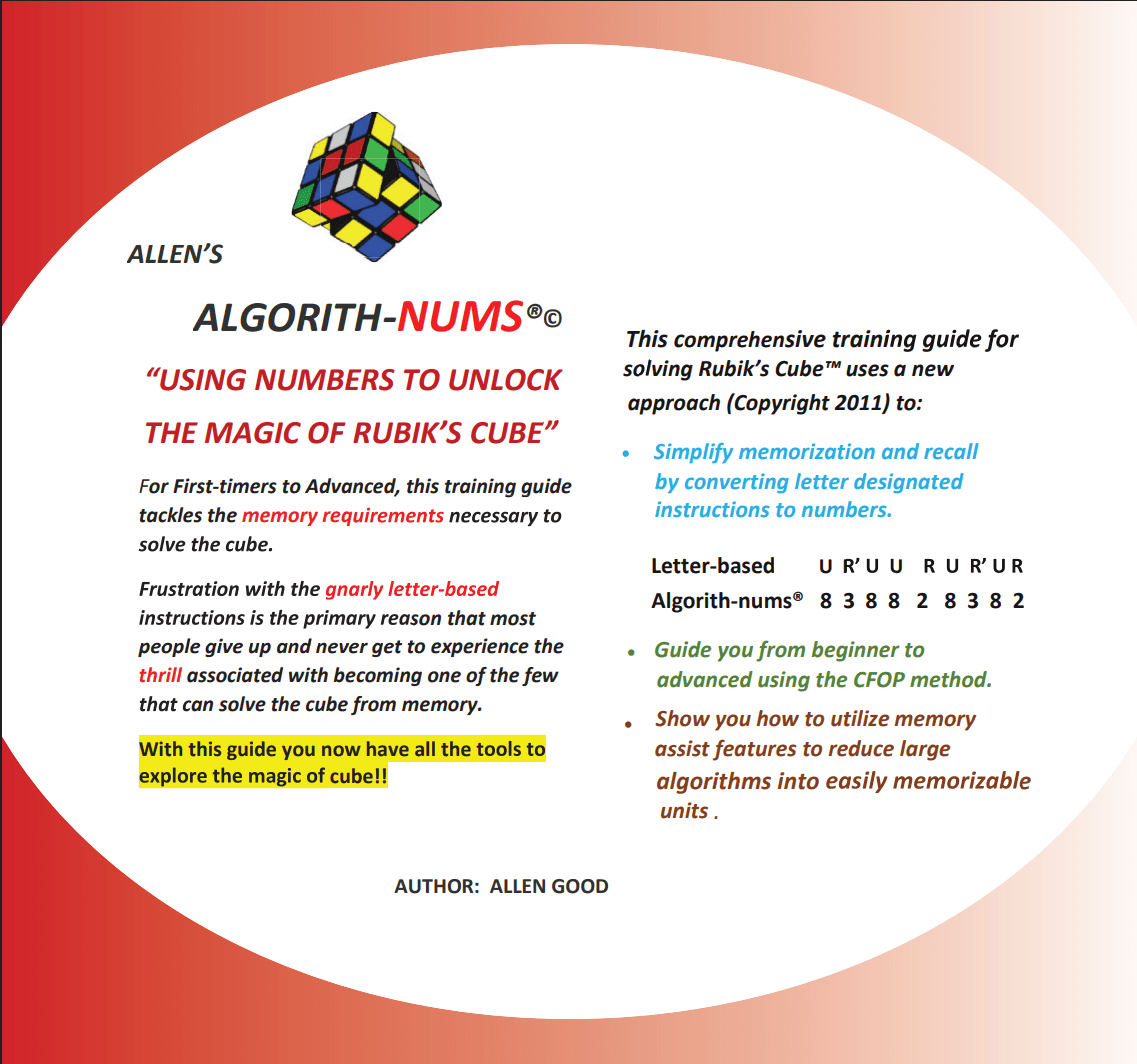
This comprehensive Rubik's Cube™ training guide introduces a different approach to memorization by converting traditional letter-based algorithms into numbers.
Traditional Format
U R'U U R U'R'U R
Algorith-nums® Format
8 3 8 8 2 8 3 8 2
The guide is designed to:
- Simplify memorization and recall through number-based instruction.
- Support beginner to advanced progression using the CFOP method
- Reduce larger algorithms into easier memory units.
- Provide structured recall support for long-term cube retention.
For many cubers, frustration with traditional letter algorithms becomes the main reason they stop progressing. This guide was built to reduce that frustration and make cube-solving feel more approachable.
“With this guide you now have all the tools to experience the magic of the cube.”
Author
Allen Good
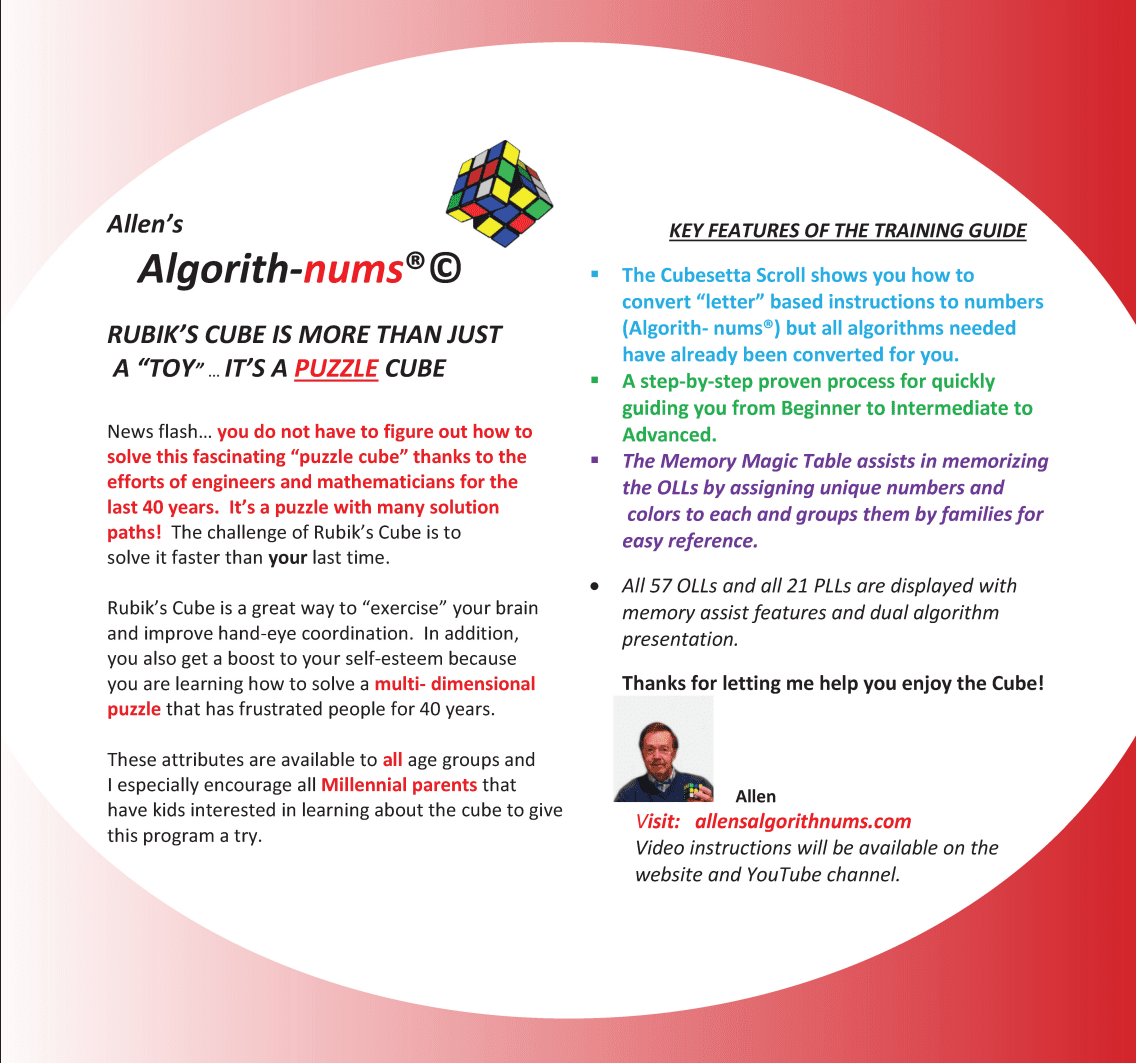
Key Features of the Training Guide
About the Author
His Age
Allen was born in 1946, the same year that Erno Rubik was born. He was 65 years old when copyright was granted in 2011.
His Career
He spent many years working in demanding financial positions before retiring at the end of 2025 at age 79.
His Family
Allen has a wife and two children whom I helped put through college.
Biggest Regret
For years, he believed someone else must already be using this system, so he convinced himself it was not worth the time or expense to pursue further.
As it turned out, he was wrong.
Cube Usage Timeline
1980–1981
Rubik's Cube arrived in the USA, and he bought a beginner's book and solved it in under five minutes.
2007
After watching The Pursuit of Happyness, he returned to cubing and eventually reached 85-second solves.
2011
The booklet was completed.
2011–2026
Continued active cubing with a personal goal of two-minute solves at age 80.
2026
Learned to solve the 2×2 cube with guidance from Jperm videos.
Why a Rubik's Cube?
Rubik's Cube is more than just a toy. It is a puzzle cube with countless solution paths developed over decades by engineers, mathematicians, and cube enthusiasts.
You do not need to invent a solution from scratch. The challenge is improving your solving ability and becoming faster than your previous solve.
Cube-solving can help with:
These benefits can apply to all age groups, from younger cubers to older adults interested in keeping their minds active.